There’s a particular kind of pride in carving a joint properly. The knife glides through, the slices fall cleanly, the juices pool exactly where they should, and for a moment everyone at the table is watching. It’s a small ritual that gets repeated every Sunday and at every Christmas table across the country. What rarely gets the credit it deserves is the board underneath all of it, quietly doing the heavy lifting.
The Job a Carving Board Actually Has to Do
A chopping board and a carving board look similar, but they’re solving different problems. A carving board has to hold a heavy joint steady while you work, manage a surprising amount of liquid, and survive repeated contact with a sharp knife, all without sliding around or marking your worktop. That’s why proper carving boards are built with descending juice grooves that channel everything toward a well, rather than letting it run off the edge and onto the table. Some boards go a step further with a pouring spout, so the collected juices can be tipped straight into a jug for gravy. It’s a small detail, but anyone who has ever mopped meat juice off a counter knows exactly why it matters.
Stainless steel meat spikes are another quiet upgrade worth knowing about. They hold the joint firmly in place while you carve, which means both hands are free for the knife and fork instead of one hand wrestling the meat still. Once you’ve carved on a board with spikes, going back to one without feels unnecessarily difficult.
Oak or Walnut: Choosing the Right Timber
The two classic choices for a carving board are English oak and American black walnut, and the right one comes down to feel as much as looks. Oak is pale, warm, and has an open grain that gives it a timeless, familiar character, the kind of board that looks right at home at a traditional Sunday table. Walnut runs darker and richer, with a tighter grain that gives it a more contemporary, almost formal presence. Both are dense, durable hardwoods that stand up well to repeated knife contact, so the decision really is about which one suits your table rather than which one performs better.
Why Handmade, Made-to-Order Boards Are Worth Seeking Out
A mass-produced carving board is built to a single standard size with whatever finish is cheapest to apply at scale. A handmade board is a different proposition entirely. Each piece of timber is selected for its grain and density, sanded through multiple grades by hand, and finished with several coats of natural oil rather than a quick spray. That process takes time, and it shows in the weight, the smoothness, and the depth of colour in the finished board. Many small workshops also build to order rather than holding finished stock, which means the size, the timber, and the features like spikes or a pouring spout can all be adjusted to suit how you actually cook, rather than settling for whatever happens to be on the shelf.
Personalisation Turns a Tool Into a Keepsake
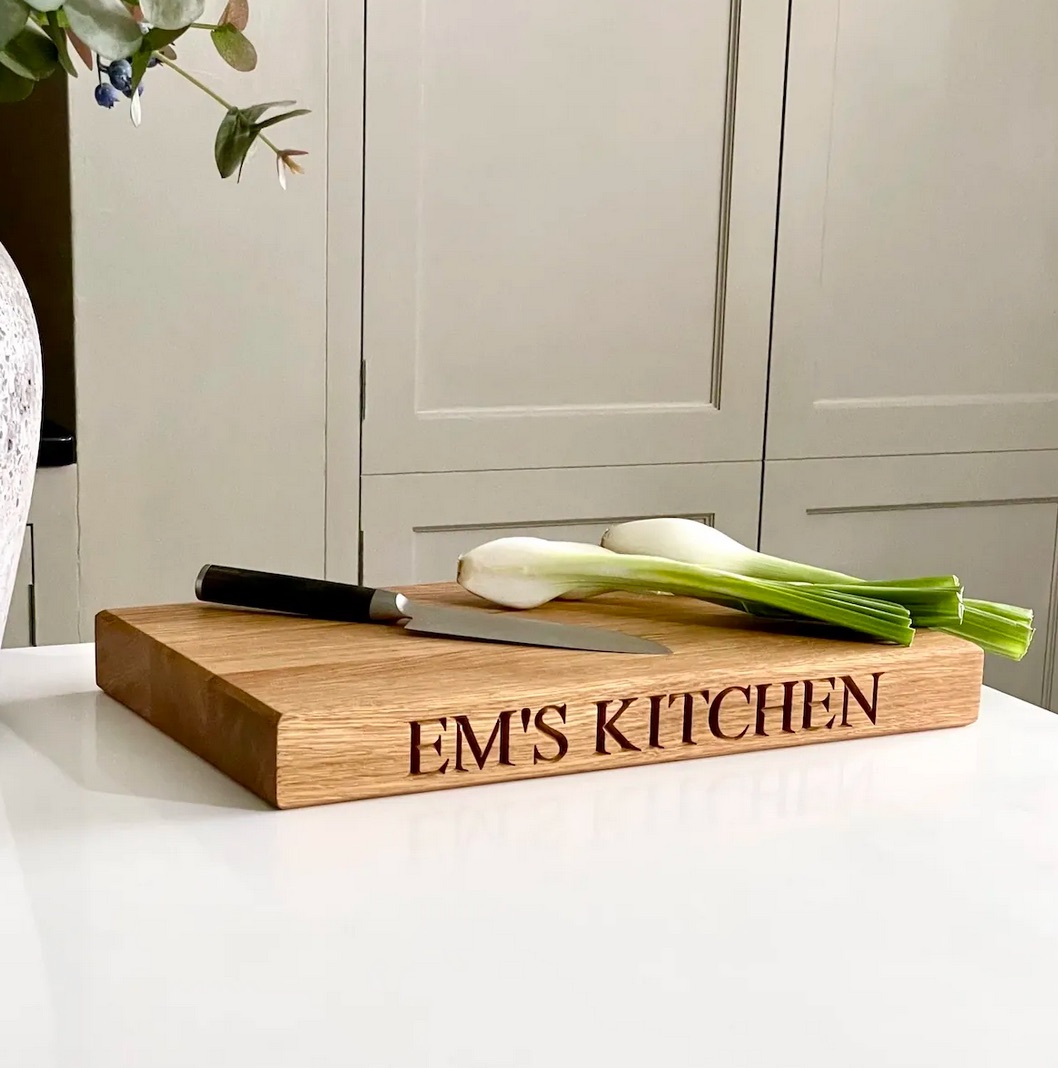
Engraving is what moves a carving board from “useful” to “treasured.” A family name along the edge, a set of initials, or a meaningful date turns a board into something that gets talked about every time it comes to the table. A private message engraved on the underside, a family recipe, a dedication, or simply a note for whoever inherits it next, adds a layer that no shop-bought board can match. For a wedding, a housewarming, a significant anniversary, or the relative who has quietly taken charge of carving for twenty years, a personalised carving board tends to be remembered long after the meal is finished.
Looking After a Wooden Carving Board
Wash by hand, dry it properly, and avoid leaving it to soak. A food-safe oil worked into the surface every few weeks keeps the grain nourished and stops the timber from drying out or splitting over time. Treated well, a solid oak or walnut carving board will outlast several ovens and easily become the kind of thing that gets handed down rather than replaced.
If you’re after one built properly, it’s worth taking a look at a dedicated range of personalised wooden carving boards rather than settling for a generic chopping board pressed into service on roast day.
