There’s a moment at every good gathering when the cheeseboard comes out and the room shifts. Conversation slows down, people lean in, someone always asks where the board itself came from. It turns out the board matters almost as much as what’s on it. Once you’ve laid out a spread on a proper piece of solid timber, it’s hard to go back to anything else.
Why Wood Wins
Cheese is forgiving about almost everything except the surface it’s served on. Marble looks smart in photographs but feels cold and clinical in the hand, and it blunts your knife within a few uses.
Plastic does the job and nothing more. Wood sits in a different category entirely. It has warmth, it has give, and it’s kind to both your cheese knife and your cheese. A good board also develops character over time: every gathering leaves the faintest trace in the grain, so a wooden board genuinely improves with age rather than just wearing out.
There’s a practical reason chefs reach for wood too: many hardwoods have natural antimicrobial properties that make them a genuinely hygienic choice for serving, not just a stylish one.
Oak or Walnut? It’s Not Just Aesthetics
The choice of timber changes the entire feel of a board. English oak has a pale, golden tone with a distinctive open grain. It’s the timber of choice if you want a board that feels classic and unmistakably British. American black walnut sits at the other end of the spectrum: deep chocolate-brown tones with a tighter, more subtle grain pattern, giving a board a richer, more contemporary look. Neither is “better”; it’s really a question of which one suits your kitchen, your table setting, and the kind of statement you want the board to make. A handmade wooden cheese board lets you choose properly, rather than settling for whatever a single supplier happens to stock.
Handmade Versus Mass-Produced
This is where the difference really shows. A mass-produced board is cut from whatever timber is cheapest that week, finished with a generic sealant, and shipped in the thousands. A handmade board is selected piece by piece: the grain checked, the timber chosen for how it will look and wear, the surface sanded and finished by hand rather than by machine. You can feel the difference the moment you pick one up. It’s smoother, warmer, and noticeably heavier in a way that signals quality rather than bulk.
This is also why solid wood and slate combinations have become so popular. Pairing solid oak with a slate inlay gives you the warmth of timber alongside a naturally cool surface that’s ideal for soft cheeses, charcuterie, and anything that benefits from staying a touch cooler at the table, all without sacrificing the look of a proper handcrafted piece.
Building a Board Worth Talking About
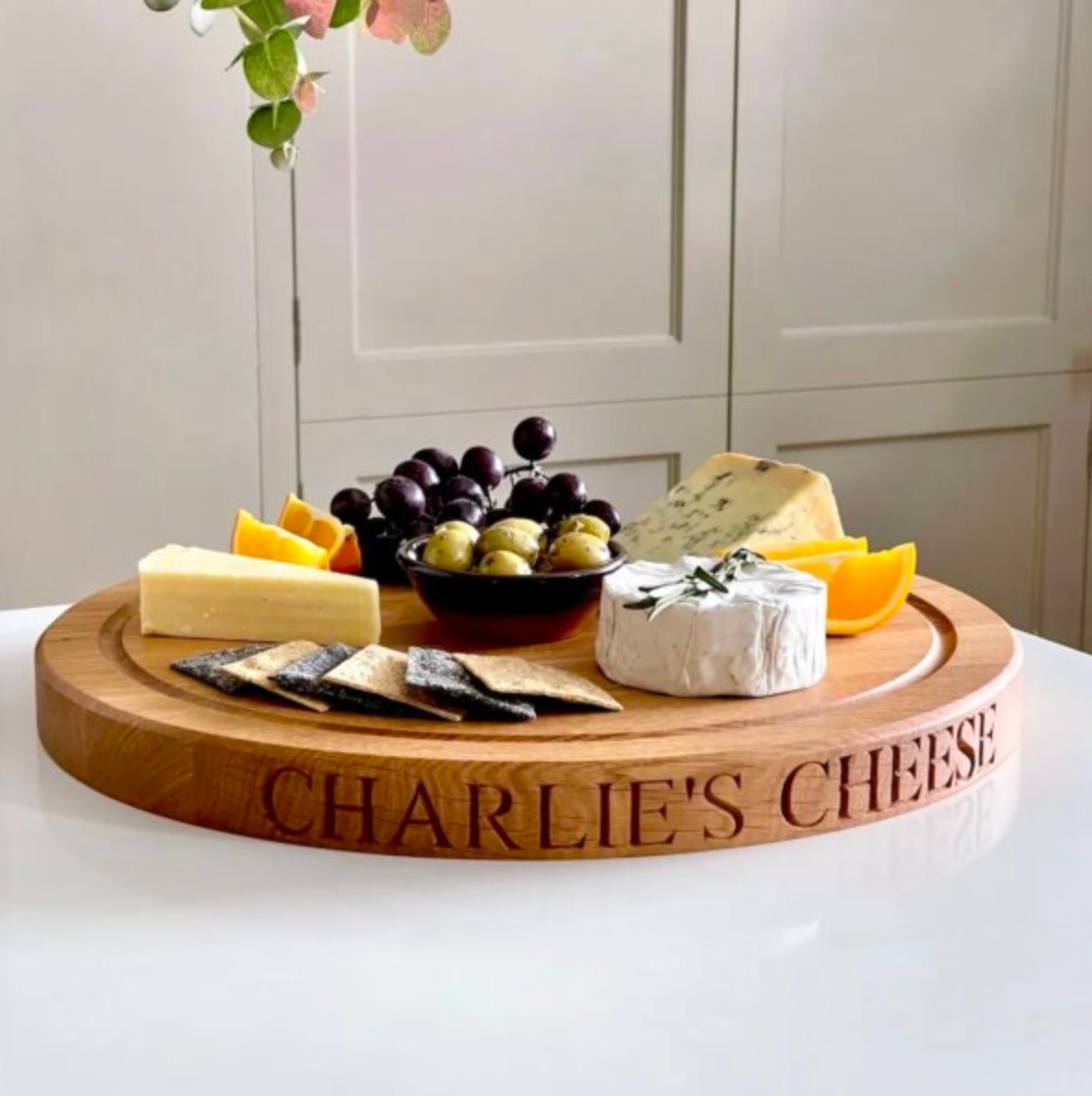
A great cheeseboard is about contrast. Aim for at least one hard cheese, one soft, and one blue, then add something with texture, such as walnuts, dried fruit, or a sharp chutney, to break things up. Group cheeses loosely by strength rather than scattering them at random, and leave gaps for crackers and bread so the board doesn’t feel overcrowded. The size and shape of the board does a surprising amount of the work here: a generous round board gives everything room to breathe and tends to feel more like a centrepiece, while a classic rectangular board suits a tighter, more structured arrangement.
When a Board Becomes a Gift
A wooden cheeseboard already makes a thoughtful present, but engraving it tips it into something else entirely: a genuine keepsake rather than a kitchen item. A surname, a wedding date, initials, or a private message on the underside turns a beautiful object into something personal, and it’s the kind of gift that gets used at every gathering for years afterwards rather than tucked away in a cupboard. For housewarmings, weddings, anniversaries, or simply the friend who always hosts, a personalised wooden cheese board tends to land better than almost anything else you could wrap.
Looking After It
Wood needs feeding, not just washing. A food-safe oil worked into the surface every few months keeps the timber from drying out and deepens the grain over time, while harsh detergents and the dishwasher will dull it fast. Treated properly, a solid oak or walnut board will easily outlast the kitchen it started in.
If you’re in the market for one, it’s worth browsing a proper range of personalised wooden cheese boards before settling on a generic version. The difference, once you’ve held both, is obvious.
