A good wooden chopping board is built to last decades, but only if it’s looked after properly. The good news is that wood is forgiving. Even a board that has been neglected for a while can usually be brought back with a bit of attention.
Here is everything you need to know to keep a wooden board in good shape for the long term.
Why Oiling Matters
Wood is a natural material that absorbs and releases moisture constantly. Without regular oiling, that cycle causes the timber to dry out, which leads to cracking, splitting, and warping over time.
Oiling seals the grain just enough to slow that process down, while still letting the wood breathe naturally. It also brings out the depth of colour in the timber and keeps the surface smooth rather than rough and porous.
An oiled board is also more hygienic. A dry, rough, heavily scored board traps food particles and bacteria in its surface in a way that a well-maintained, smooth board does not.
Which Oil to Use
This is where a lot of people go wrong. Not all oils are suitable for wooden chopping boards, and using the wrong one can do more harm than good.
Food-safe mineral oil is the most widely recommended choice. It’s colourless, odourless, inexpensive, and does not go rancid. It soaks into the grain quickly and effectively and is widely available online and in kitchen shops.
Raw linseed oil and pure tung oil are natural plant-based alternatives that harden slightly in the wood rather than staying liquid, which some people prefer. Both are food-safe once fully cured.
They take longer to dry than mineral oil, so allow 24 hours between coats.
Coconut oil, walnut oil, and other food oils from the kitchen are sometimes recommended, but they come with a significant drawback: they go rancid over time, which means the board will eventually develop an unpleasant smell. They are best avoided.
Beeswax board cream (usually a blend of beeswax and mineral oil) is excellent as a finishing treatment on top of a well-oiled board. It adds a light protective layer to the surface and gives the timber a subtle sheen. It does not replace oil as a base treatment, but works very well alongside it.
How Often to Oil
A new board should be oiled before its first use and again several times in the first few weeks.
Apply a generous coat, let it soak in for a few hours or overnight, then wipe off any excess and repeat. Three to five coats in the first month will saturate the grain properly and set the board up well for the long term.
After that, once a month is a reasonable routine for a board in regular daily use. A simple way to test whether a board needs oiling is to sprinkle a few drops of water on the surface. If the water beads up, the board is well-oiled. If it soaks straight in, the board needs attention.
Boards in lighter use can be oiled every two or three months, but it’s better to oil a little more often than to let the timber dry out.
Washing and Drying
Wash a wooden board by hand using warm water and a small amount of washing-up liquid.
Despite what is sometimes claimed, a mild soap will not damage a well-oiled board. What will damage it is soaking. Never leave a wooden board sitting in water, and never put it in the dishwasher. The prolonged heat and moisture will cause the timber to swell, warp, and eventually crack.
After washing, dry the board immediately with a cloth and then stand it upright on its edge rather than leaving it flat on the worktop. Standing it upright allows air to circulate around both sides, which prevents the board from absorbing moisture unevenly and warping over time.
Removing Odours and Stains
For persistent smells, particularly after cutting onions or garlic, sprinkle coarse salt over the surface and rub it in with half a lemon. The salt acts as an abrasive and the lemon juice neutralises odours naturally. Rinse and dry thoroughly afterwards, and follow up with oil if needed.
For surface stains, a light sand with fine-grade sandpaper (180 to 220 grit) will usually remove them. Always sand in the direction of the grain, not against it. Oil the board immediately afterwards to replace whatever the sanding has removed.
Fixing a Warped Board
A board that has been dried unevenly will sometimes develop a slight warp. If it’s caught early, this can usually be corrected. Wet the concave (hollow) side with a damp cloth and place the board concave-side down on a flat surface with some weight on top. Leave it for a few hours, and the board will often flatten as the moisture expands the fibres. Dry it evenly afterwards and oil it well.
A board that has been allowed to warp severely may be beyond straightforward home repair, but most cases of minor warping respond well to this method if tackled promptly.
The Boards That Benefit Most from Good Care
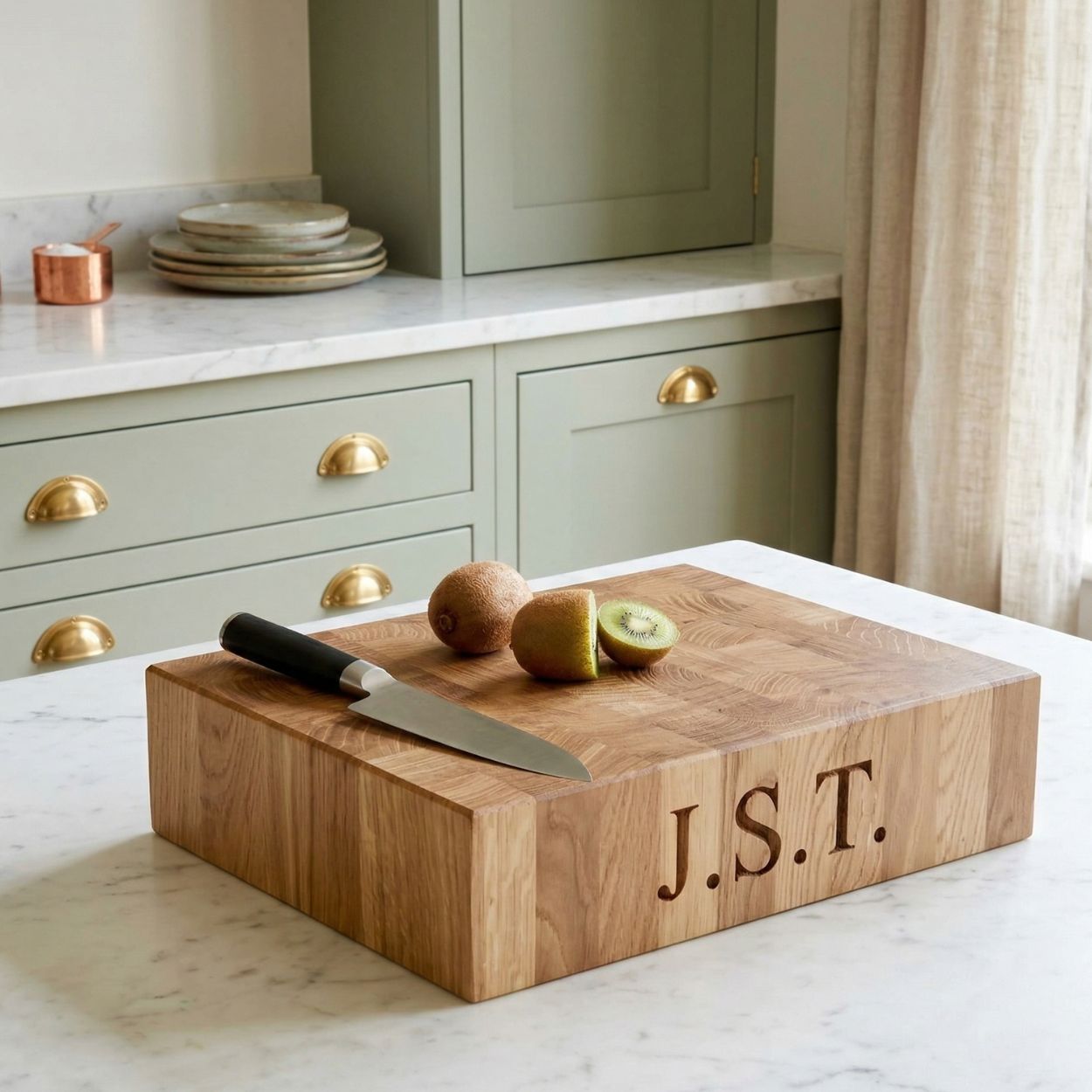
End grain boards in particular reward careful maintenance. Because the end of the wood fibre faces upward, oil is drawn into the grain more readily and the board becomes increasingly beautiful with age when oiled consistently. A well-maintained end grain board from a solid oak or walnut construction can genuinely last a lifetime.
Edge grain and face grain boards, including most personalised wooden chopping boards, respond equally well to regular oiling and will stay smooth and crack-free for years with a simple monthly routine.
The effort involved is minimal. Five minutes once a month, and a wooden board will reward you with decades of reliable, beautiful use.
