The short answer: wash a wooden chopping board by hand with warm water and a small amount of washing-up liquid, rinse it thoroughly, and stand it upright on its edge to dry. Never put it in the dishwasher and never leave it soaking in water. That is all the cleaning a wooden board needs for everyday use.
Why the Dishwasher Is Not an Option
This is the rule that matters most. A dishwasher exposes a wooden board to prolonged heat and saturating moisture, which causes the timber to swell unevenly, warp, and eventually crack. In most cases a single dishwasher cycle is enough to cause permanent damage to a solid wooden board.
Hand washing takes thirty seconds and keeps the board in good condition for years. The dishwasher ruins it in one go.
The Right Way to Wash a Wooden Board
Washing a wooden board properly is straightforward:
Use warm water and a small amount of washing-up liquid. Mild dish soap will not harm a well-oiled wooden board, despite what is sometimes claimed. The idea that soap damages wood is a myth.
What damages wood is soaking, not soap.
Scrub with a brush or cloth. Work across the surface to lift any food residue. For stubborn bits, a stiff-bristled brush is more effective than a cloth.
Rinse thoroughly. Make sure all soap residue is removed before drying.
Dry immediately. Do not leave the board wet on the worktop. Wipe it down with a clean cloth straight after rinsing.
Stand it upright to finish drying. Place the board on its edge so air can circulate around both faces.
This is the most important drying step. A board left flat on the worktop dries unevenly, which causes warping over time.
How to Deal with Stubborn Smells
Onions, garlic, and fish are the most common sources of persistent odours on a wooden board.
The most effective remedy is also the simplest: sprinkle coarse salt generously over the surface of the board, then rub it in firmly using half a lemon, cut side down. The salt works as a mild abrasive to lift residue from the grain, and the acid in the lemon juice neutralises the odour-causing compounds.
Leave the salt and lemon mixture on the surface for a few minutes before rinsing and drying as normal. Repeat if necessary. This method works well on all types of wooden boards and leaves no chemical residue.
How to Remove Surface Stains
Light staining from berries, beetroot, or heavily pigmented foods can usually be lifted with the salt and lemon method described above. For deeper or more stubborn staining, a light sand with fine-grade sandpaper (180 to 220 grit) will remove the surface layer and expose fresh timber underneath. Always sand in the direction of the grain, never against it.
After sanding, oil the board immediately. Sanding removes the protective oil layer along with the stain, and the freshly exposed timber needs feeding straight away to prevent it from drying out.
How Often Should You Sanitise a Wooden Board?
For most everyday cooking, warm water and washing-up liquid is all that is needed after each use.
If the board has been used for raw poultry or raw meat and you want additional peace of mind, a dilute solution of white vinegar and water (roughly one part vinegar to four parts water) applied to the surface and left for a few minutes before rinsing provides effective natural sanitisation without damaging the timber.
Avoid bleach and other harsh chemical cleaners. They can strip the oil from the grain, dry out the timber, and potentially leave residue that you would rather not have on a food preparation surface.
Keeping the Board in Good Condition Between Washes
Cleaning keeps a board hygienic; oiling keeps it in good structural condition. The two routines work together. A board that is cleaned regularly but never oiled will dry out, develop surface cracks, and eventually become harder to keep clean because the dry, rough grain traps more food residue.
For a board in daily use, a thorough oiling with food-safe mineral oil once a month is a good routine. Apply the oil generously to all surfaces including the underside and edges, leave it to soak in for a few hours or overnight, then wipe off any excess. A well-oiled board repels moisture more effectively, dries faster after washing, and stays smooth and easy to clean for much longer.
The Bottom Line
Cleaning a wooden chopping board properly takes very little time and requires nothing more than warm water, washing-up liquid, and the habit of standing it upright to dry. Avoid the dishwasher, avoid soaking, and oil the board regularly, and it will stay in excellent condition for years.
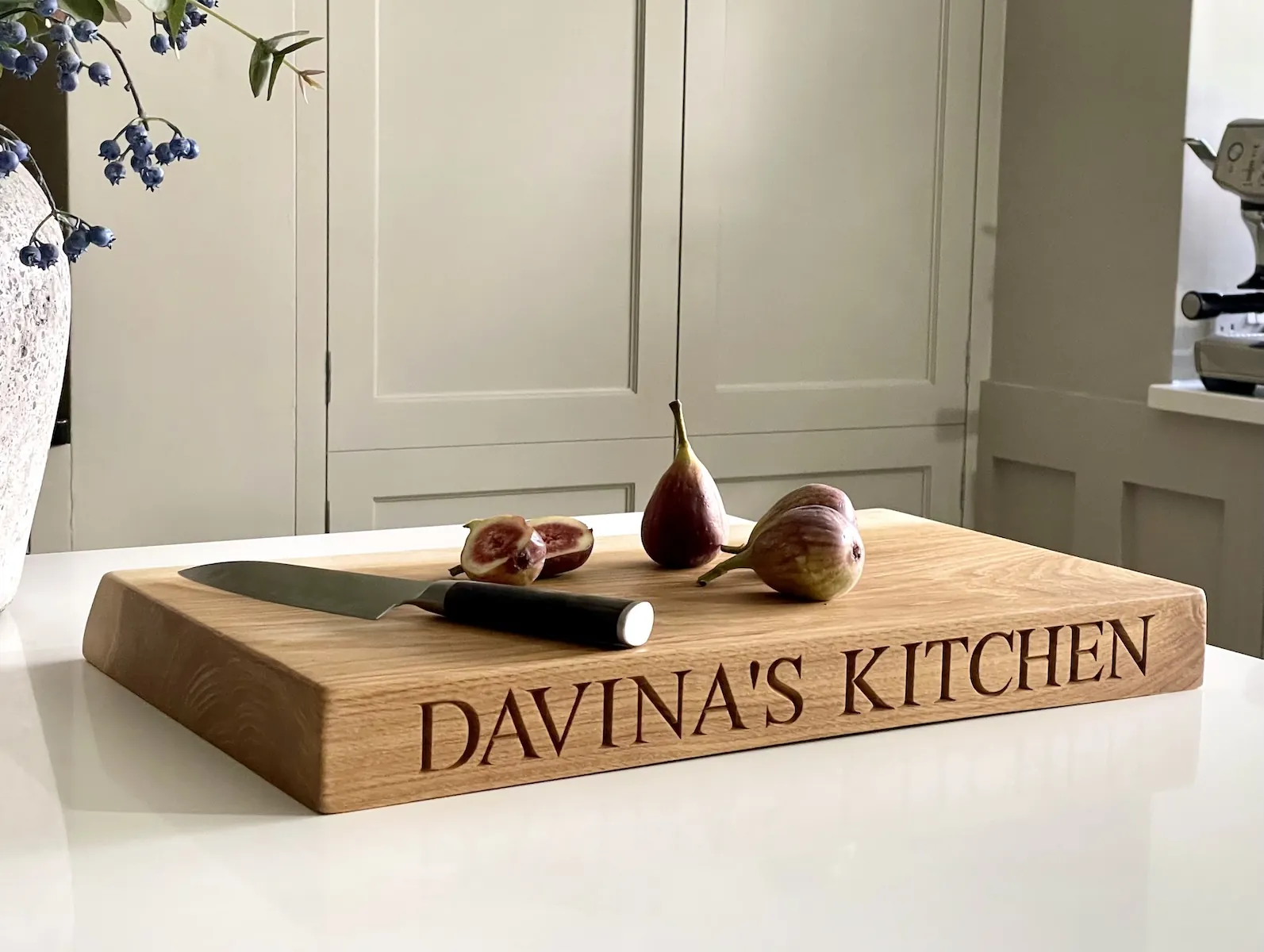
Our range of personalised wooden chopping boards are made from solid oak and walnut and come with care guidance to help you get the most from them from day one.
